
Working Out While Sick: Good or Bad?

This is very important question, bellow will answer the best way that we could.

Some experts use the “above the neck” rule to determine whether working out while sick is safe. Exercise is most likely safe when symptoms are located from the neck up.

When It’s Safe to Exercise

1.Mild Cold

A mild cold is a viral infection of the nose and throat.

Though symptoms vary from person to person, most people who have a cold experience a stuffy nose, headache, sneezing and mild cough.

If you have a mild cold, there’s no need to skip the gym if you have the energy to work out.

Although, if you feel that you lack the energy to get through your normal routine, consider reducing the intensity of your workout or shortening its duration.

While it’s generally ok to exercise with a mild cold, keep in mind that you might spread germs to others and cause them to become ill.

Practicing proper hygiene is a great way to prevent spreading your cold to others. Wash your hands frequently and cover your mouth when you sneeze or cough.

2.If you have aches and pains . . . listen to your body.

Giamo usually tells clients to try a workout, and if they start feeling bad after 15-20 minutes, then call it quits. In any workout, you’ll experience some discomfort associated with muscles being activated, but notice things like being unable to catch your breath or wheezing, as these are additional signs to stop what you’re doing.

“If you’re feeling fatigued or excessively tired, it’s better not to work out when sick,” says Dr. Ali. “Save your energy to allow for your body to feel better and recover.”

“Decide if you’re up for exercising, or would feel more comfortable reserving your energy,” offers Dr. Marcus. “Often times after resting for a few days when sick, people will realize they missed working out and will come back more determined than before.”

3.Earache

An earache is a sharp, dull or burning pain that can be located in one or both ears.

Though ear pain in children is commonly caused by infection, earache in adults is more commonly caused by pain occurring in another area, such as the throat. This pain, which is known as “referred pain,” then transfers to the ear.

Ear pain can be caused by sinus infections, sore throat, tooth infection or changes in pressure.

Working out with an earache is considered safe, as long as your sense of balance is not affected and an infection has been ruled out.

Certain types of ear infections can throw you off balance and cause fevers and other symptoms that make working out unsafe. Make sure you don’t have one of these ear infections before beginning exercise.

However, most earaches can just be uncomfortable and cause a feeling of fullness or pressure in the head.

Though exercise is likely safe when you have an earache, try to avoid exercises that put pressure on the sinus region.

4.Stuffy Nose

Having a stuffy nose can be frustrating and uncomfortable.

If it’s associated with a fever or other symptoms like a productive cough or chest congestion, you should consider taking some time off from working out.

However, it’s ok to work out if you are only experiencing some nasal congestion.

In fact, getting some exercise may help open up your nasal passages, helping you breathe better.

Ultimately, listening to your body to determine if you feel well enough to exercise with a stuffy nose is the best bet.

Modifying your workout to accommodate your energy level is another option.

Going for a brisk walk or bike ride are great ways to stay active even when you aren’t feeling up to your usual routine.

Always practice proper hygiene at the gym, especially when you have a runny nose. Wipe down equipment after you’ve used it to avoid spreading germs.

When Exercise Is Not Recommended

1.If you have a fever or the flu . . . skip the workout.

“The best advice is to not work out if your symptoms occur below the neck. This means not working out with a fever since you don’t want to increase your body temperature even further,” explains Jasmine Marcus, PT DPT. She’s right, and the so-called “neck check” is based on a study about exercising while ill.

Cunningham also recommends skipping exercise if you’re running a fever. That said, don’t assume the lack of a fever gives you the green light to work out when sick. “ Depending on what’s wrong, running outside in the cold or doing something to aggravate your immune system or make it fight harder may only set you back,” she notes. “Always consult your doctor if you have questions but never beat yourself up for taking a rest day if you don’t feel well. Listening to your body is key.”

“If you have a fever and/or the chills, it is always a good idea to rest and not work out until fully recovered,” says Ehsan Ali, MD. When your body has the flu, it’ll take three to five days for symptoms (such as chills, nausea, diarrhea and vomiting) to taper off. Do not exercise until you’re feeling better and you’ve been fever free for at least 24 hours.

2.Productive or Frequent Cough

An occasional cough is a normal response to irritants or fluids in the body’s airways, and it helps keep the body healthy.

However, more frequent episodes of coughing can be a symptom of a respiratory infection like a cold, flu or even pneumonia.

While a cough associated with a tickle in the throat isn’t a reason to skip the gym, a more persistent cough can be a sign you need to rest.

Although a dry, sporadic cough may not impair your ability to perform certain exercises, a frequent, productive cough is reason to skip a workout.

A persistent cough can make it difficult to take a deep breath, particularly when your heart rate rises during exercise. This makes you more likely to become short of breath and fatigued.

A productive cough that brings up phlegm or sputum may be a sign of infection or another medical condition that requires rest and should be treated by a doctor.

3.Stomach Bug

Illnesses that affect the digestive system, such as the stomach flu, can cause serious symptoms that make working out off-limits.

Nausea, vomiting, diarrhea, fever, stomach cramping and decreased appetite are all common symptoms associated with stomach bugs.

Diarrhea and vomiting put you at risk of dehydration, which physical activity worsen.

Feeling weak is common when you have a stomach ailment, increasing the chance of injury during a workout.

What’s more, many stomach illnesses like the stomach flu are highly contagious and can be easily spread to others.

If you are feeling restless during a stomach illness, light stretching or yoga at home are the safest options.

SUMMARYIf you are experiencing symptoms like fever, vomiting, diarrhea or a productive cough, taking time off from the gym may be the best option for both your own recovery and the safety of others.

If you are looking for workout clothes check our fitness and yoga leggings page.
Sources:www.healthline.com,www.aaptiv.com

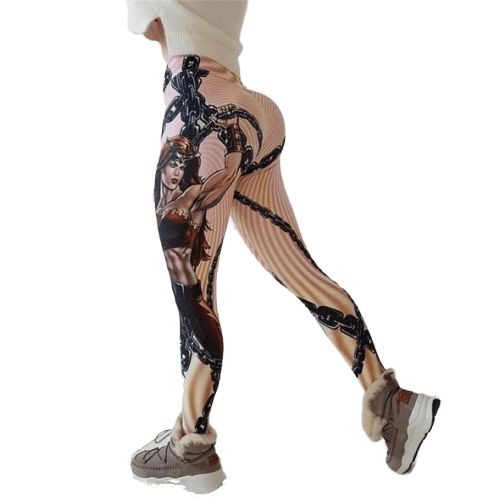
workout leggings
fitness and yoga leggings

Top 10 Pros And Cons Of Personal Trainer

Should we hire personal trainer or continue rely on your knowledge.

Pros
1. A personal trainer can look at your physical condition and write a workout plan that will help you meet your specific physical fitness goals.

 If, for instance, you have been steadily exercising for years but you have seen very little muscle development, a personal trainer can help you tweak your workout to fit your fitness level and your body type, thereby ensuring that the strength of your biceps (or your triceps or your gluteus maximus or all the muscles in your whole body) are seen by everyone you know. A personal trainer can help you work out through injuries by ensuring a workout that gets your heart rate up but does not exacerbate the damage. A personal trainer can help you lose weight, develop muscle definition, or lower your BMI. Often, a personal trainer can help you do all of this and more.

2.Accountability

This is probably the primary reason people pursue a trainer. If someone makes me show up, then I have to show up! If I’m paying someone to train me, I definitely will be there! One of the biggest issues with making fitness a lifestyle versus a temporary roller coaster ride is accountability. We have created such strange aversions to working out and in some cases, have actually convinced ourselves we hate working out! I can’t wrap my head around it. Here’s the deal, our bodies were MEANT to move. Guess what else? The stories we tell ourselves over and over are what become our reality. Guess what else? No one else on this planet can tell your story for you. Shocking right? Sharing a favorite quote of mine from a well-known Crossfitter and current residency student, Julie Foucher.

“Someone told me before to listen to the story that you’re telling yourself…Because a lot of the times we make our reality by the stories that we’re telling, and you can tell any story in a positive way or in a negative way, and so it helps to stop and ask yourself, ‘OK, what is the story I’m telling myself: Is this really a reality, and how can I change this story to make it a better reality?’”

How powerful is that?! So YES, working with a trainer can help keep you accountable and create positive habits for yourself. There’s nothing negative about it.  

3. A personal trainer will watch you exercise and will be able to make sure that you are using the correct form. 

We all like to think that we are using correct form while in reality we just cannot watch ourselves exercise the way someone else can. Incorrect form can lead to, at best, a lack of results, and at worse, some very serious injuries.  

4.Everyone Starts Somewhere

This definitely overlaps with number 3 above. If you are just starting out on your workout journey, it can be challenging to know not only what to do, but how to not injure yourself and overdo it. Personal trainers are qualified and educated to get you started in the best possible way. Any fitness is better than no fitness. If you need to start with an expert, go for it.

5.Higher Intensity Workouts

This is not always the case but in most cases, I’d argue that someone standing over you, pushing you further, adding extra reps and motivating you will lead to a better workout than if you were doing this on your own. Another great pro.

Cons

6.Trainers are salespeople first, personal trainers second

There’s a reason most first-time gym goers are ferried into an introductory training session. Training is big money for gyms. Not only are the training sessions themselves profitable, gyms use their trainers to push nutritional products on clients, like protein bars and powders, which are usually heavily marked up. And many commercial gyms have their own proprietary workout accessories that are mainly sold to trainees.

As much as I hate to suggest it, I’m starting to believe that this is all a giant conspiracy. Trainers play into the business model of a gym — get as many people paying a monthly fee, but not actually using the facilities — as possible. If they really showed you how much fun working out could be via compound and Olympic lifts, you would actually use the facilities.

7.Cost

Personal trainers are often expensive, usually starting at $1/minute. Three 45 minute sessions per week could mean spending $540 per month. If you can commit to working out on your own for the majority of the week, one session per week could be enough, but if you are going to pay a personal trainer, you might as well let them do their work, which means letting them take a lot of your time and a lot of your money. You could look at this point in a different way: when something costs money, that thing becomes more valuable. Then, perhaps the cost of a personal trainer will create more accountability.

8.Lack of Self-Sufficiency

This is a biggie for me. Working out with a personal is great for all of the reasons above but it can also create a dependency. If you only work out when you have a scheduled training session, that’s not a great thing. You should be able to, eventually, get in a workout on your own accord, regardless of where you are or who you are with. This is why I mentioned above that’s it’s good for those just getting started. When you show up for a training session, you should be ready to learn as well. What can you take away from that session that you can do on your own? Also, if something changes in your life that requires you to stop seeing a trainer, it shouldn’t be a reason to stop working out!

9. Are they certified?

 Some gyms have created their trainer certifications, which may or may not comply with state and federal trainer certifications. Any trainer should be able to tell you details on their certification and prove that it is current. Finding the answers is simply a matter of a little research on your part, but you should do the research.

10.Lack of Variety

I do want to preface this by saying that not all trainers fall under this category. I am confident that there are plenty of amazing and well-rounded trainers out there. In my own personal experience, the trainers I have encountered and seen do not offer enough variety during the training sessions. In their defense, I think the people they are training are not coming often enough to really be able to take them outside their comfort zone. If you are going 1-2 times a week, they don’t have as much time and experience with you to increase your routine, weights etc.

Generally speaking, if you aren’t doing the things that really push you outside your comfort zone, then you are likely not making enough progress. If working out was easy as pie, you everyone would be doing it all the time! Challenge and struggle come along with being better. If you choose to work out with a trainer, don’t ever hesitate to tell them you are ready for the next step, harder workouts, heavier weights etc.

Looking for workout clothes check our fitness and yoga leggings page.
Sources:www.inkin.com,www.pinkfortitude.com

fitness and yoga leggings
workout leggings